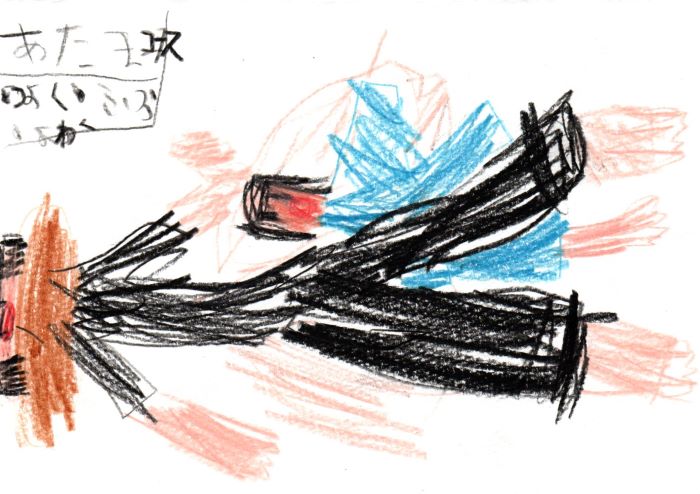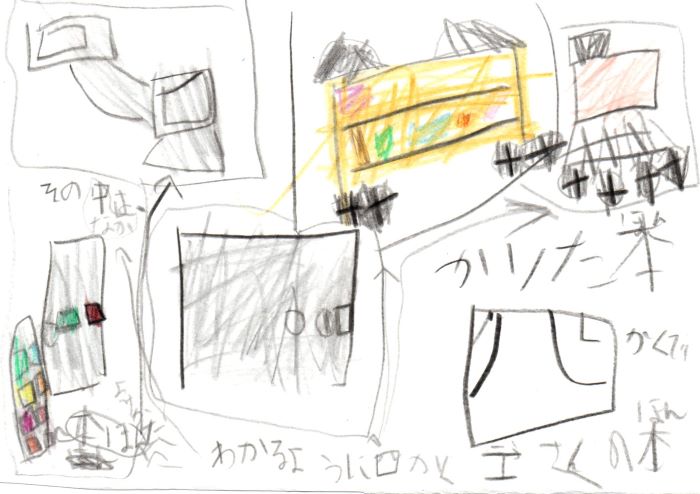
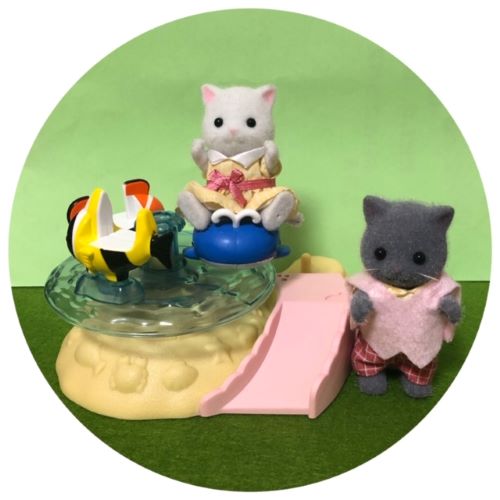
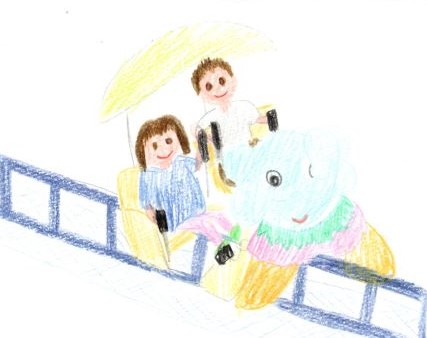
ねこはまだ身長が足りなくて、公園や遊園地の乗り物に一人で乗れません。だから遊園地に行くと乗り物に乗るときはパパが一緒に乗ります。この前公園で、自転車のようにペダルをこいで進む乗り物に乗った時。パパは力持ちなのですが、一生懸命こいでもあまり進まなかった。
パパ:「一生懸命こいでもあんまり進まなくてさー。何でかと思ってねこを見たら・・・
俺がめちゃめちゃこいでも、ねこがブレーキしてた!おかしいな〜と思ったわ!」
ねこの手が握ってるところにちょうどブレーキがあって、ブレーキをかけてたらしい(笑)
パパ、お疲れ様でした。
Neko is still too short to go by herself on rides in the park or amusement park. That’s why her dad goes with her whenever she wants to go on rides. A while ago when we went to the park, she wanted to go on a ride where you spin pedals like on a bicycle. Dad is strong, but somehow they weren’t moving much.
Dad: “I am really giving pedaling my all, but we’re not moving much.. ” As he wondered why and looked at Neko; “Here I am pedaling like mad, and Neko is braking! I thought something was off..!”
It seems Neko had been grabbing the place on the bar where the brake was located.
Good job, dad!
WORDS
- 乗り物(のりもの)=rides
- 漕ぐ(こぐ)=pedal
- ~かなと思う(~かなとおもう)=wonder
- つかむ、握る(にぎる)=grab
REMARKS
お疲れ様でした is a common phrase in Japanese that is not translatable as such into English. It indicates a recognition or acknowledgement of someone’s efforts and can be used in situations where an English speaker might say “Good job” or “That was tough, wasn’t it”. It is also used as a greeting between co-workers at the end of the working day.